ROME GUIDE :
discover Rome , your touristic Guide
Explore the History, Monuments, and events of Rome with photos and helpful tips.
5 stelle su 5
★★★★★
ROME GUIDE FOR TOURISTS
Discover the beauty of Rome through photos, plenty of useful information, and evocative stories.
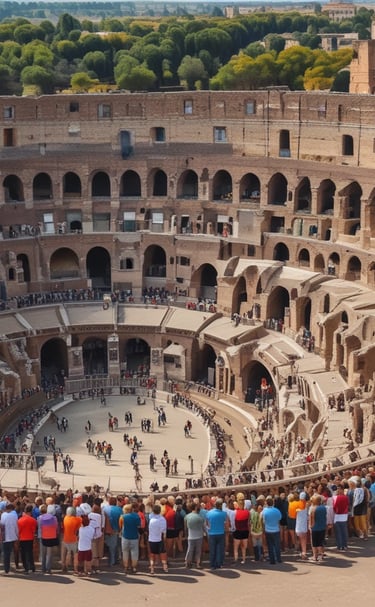
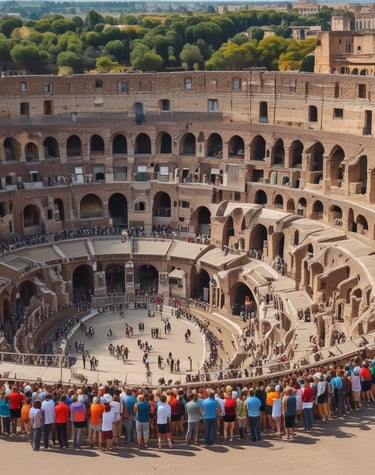
COLOSSEO
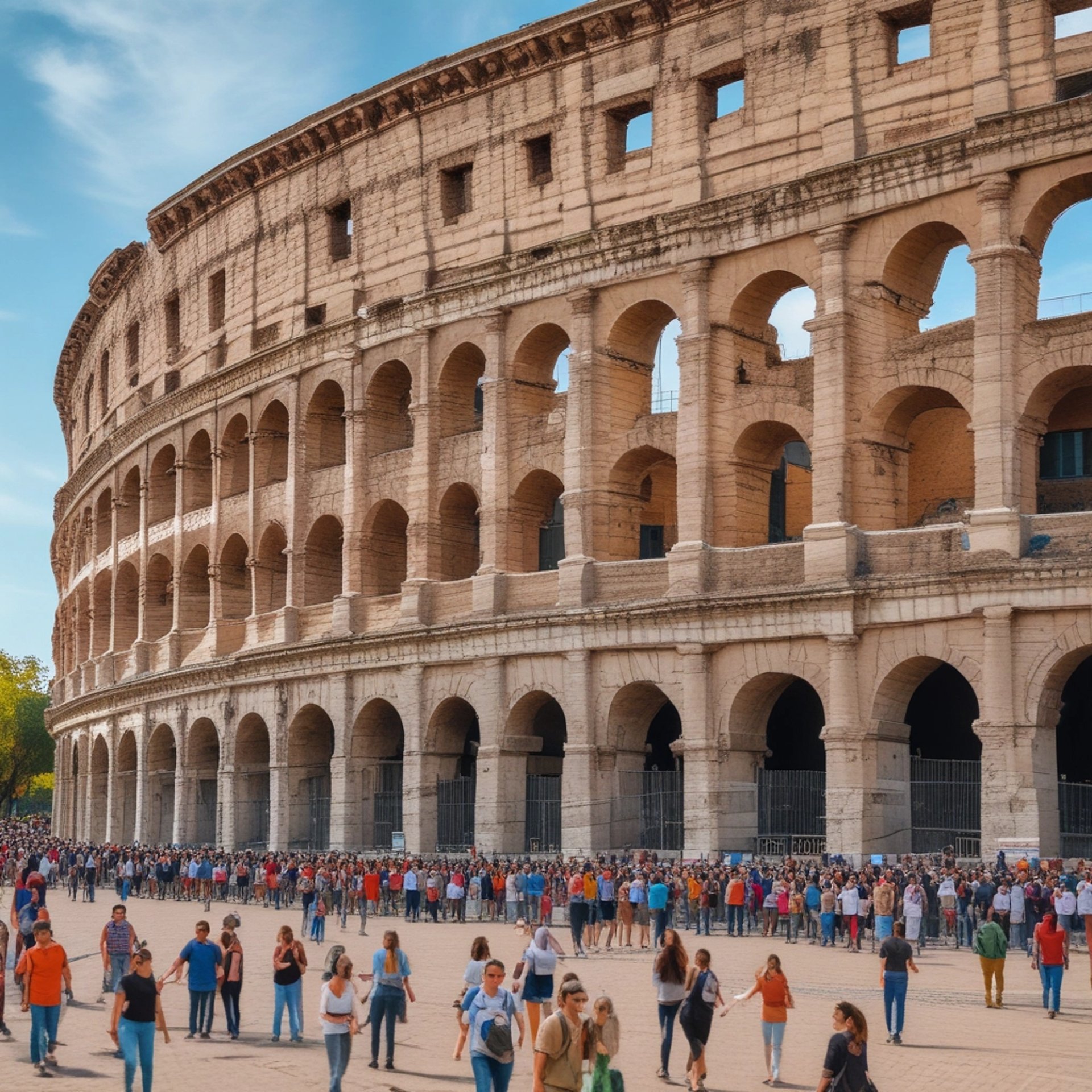
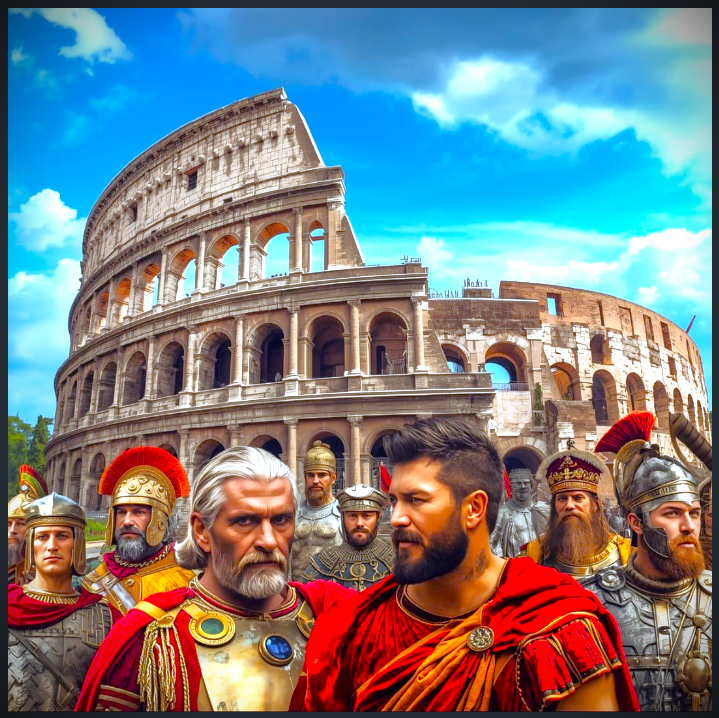
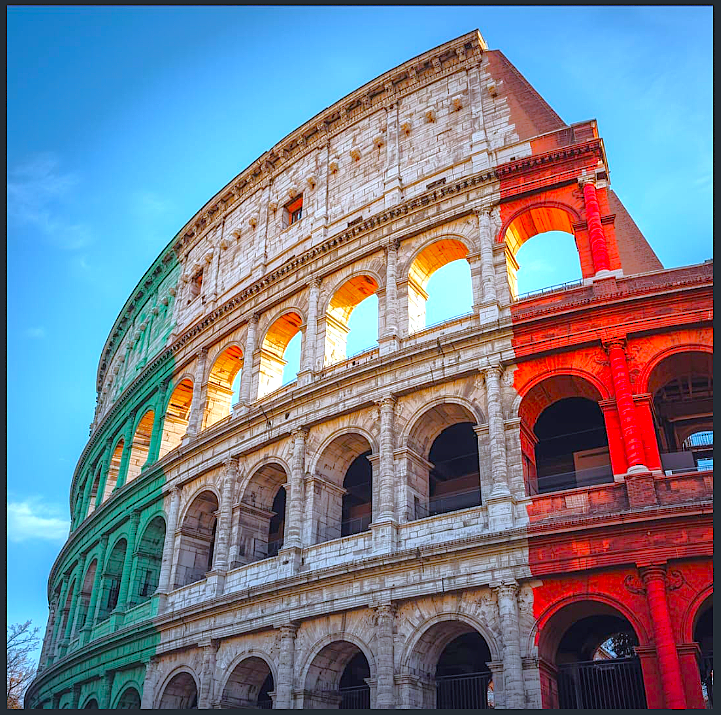
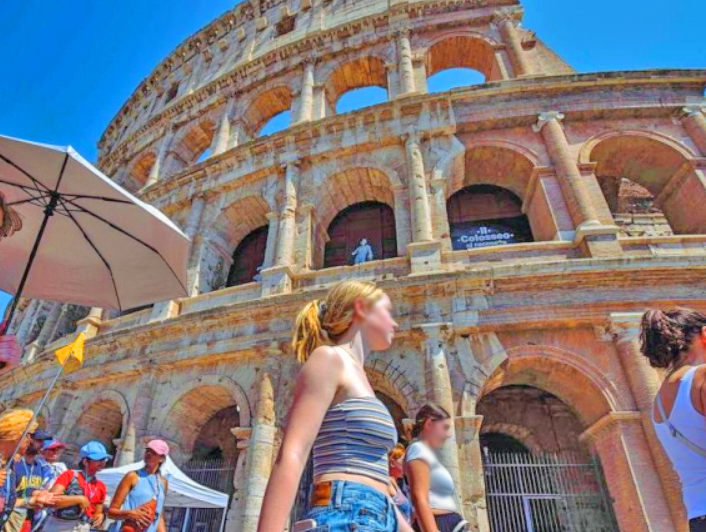
🏛️ The history of the COLOSSEUM dates back to Imperial Rome, specifically to the year 70 CE, when Emperor Vespasian of the Flavian dynasty initiated the construction of a grand amphitheater in the valley between the Palatine and Caelian Hills. His goal was to replace the extravagant Domus Aurea—Emperor Nero’s opulent palace—with a public monument that would symbolize the strength, unity, and generosity of Rome.
⚒️ Construction began in 72 CE, and the amphitheater was completed in 80 CE under Vespasian’s son and successor, Emperor Titus. The inauguration was marked by 112 days of games and spectacles, including gladiatorial combats, wild animal hunts, and even simulated naval battles, thanks to the arena’s ability to be flooded.
🎟️ Originally named the Flavian Amphitheater, the Colosseum could hold between 50,000 and 80,000 spectators, seated according to social rank. Patricians had prime seats, while plebeians and women were relegated to the upper tiers. The structure was a marvel of Roman engineering, featuring:
A complex system of vaulted corridors and staircases for efficient crowd movement.
80 entrance arches, many still numbered today.
Materials like travertine limestone, tuff, and brick-faced concrete, which gave it both durability and grandeur.
🌊 One of the most astonishing features was its hypogeum, an underground network of tunnels and cages used to house animals and gladiators before their dramatic entrances. The arena floor was made of wood and covered with sand to absorb blood—hence the Latin word arena, meaning sand.
🌍 Over the centuries, the Colosseum endured earthquakes, stone looting, and repurposing. During the Middle Ages, it was used as housing, workshops, and even a fortress by noble families. Despite this, its iconic silhouette remained a symbol of Rome’s enduring legacy.
📜 The name “Colosseum” likely derives from a colossal statue of Nero that once stood nearby, modeled after the Colossus of Rhodes. Today, the Colosseum is one of the most visited monuments in the world, attracting over 4 million tourists annually. It’s also featured on the Italian 5-cent euro coin, a testament to its national significance.
🕊️ In 1980, the Colosseum was designated a UNESCO World Heritage Site, and in 2007, it was named one of the New Seven Wonders of the World. It stands not only as a monument to Roman engineering and entertainment but also as a reminder of the empire’s complex legacy—both glorious and brutal.
📸 Whether you're a history buff, architecture lover, or simply curious, the Colosseum offers an unforgettable experience. Visitors can explore the underground chambers, walk through the ancient corridors, and imagine the roar of the crowd that once filled the arena.
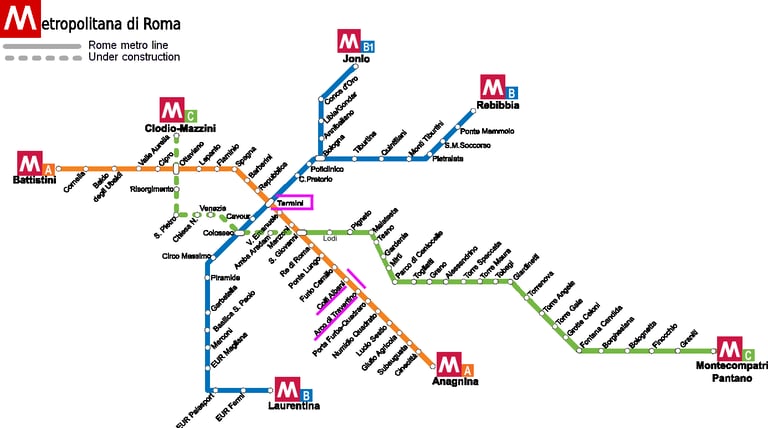
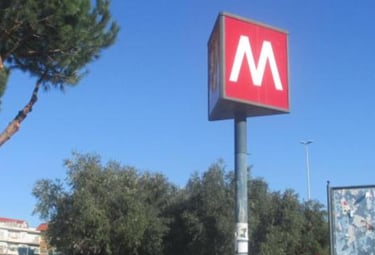
🚇 How to Get There : Take Metro Line B and get off at the "COLOSSEO" station.
FORI IMPERIALI
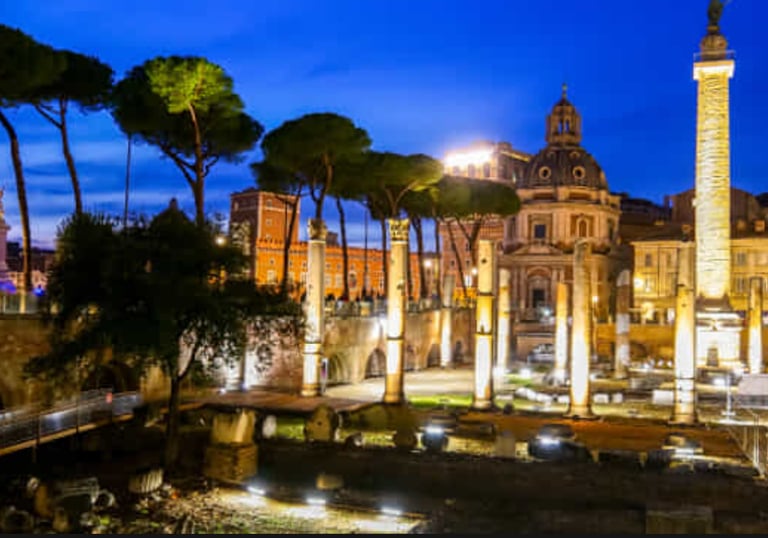
🏛️ I am an archaeological complex located in the heart of Rome, bearing witness to the city's ancient grandeur and the might of the Roman Empire.
The Imperial Forums were constructed between 46 BCE and 113 CE, serving as the political, religious, and commercial epicenter of ancient Rome. These monumental spaces were where Roman citizens gathered to debate civic matters, attend public spectacles, and pay homage to the gods.
📜 The first of these forums, the Forum of Julius Caesar, was inaugurated in 46 BCE and stood as a powerful symbol of the Julian family's influence. In the decades that followed, successive emperors continued this legacy by commissioning additional forums: the Forum of Augustus, the Forum of Nerva, and finally the Forum of Trajan, which remains the most magnificent and architecturally ambitious of them all. Trajan’s Forum included the famous Trajan’s Column, a 30-meter-high monument celebrating his military victories in Dacia.
🏬 Modern interpretations often describe the Imperial Forums as the world’s first shopping mall. And indeed, visitors today can’t help but notice the resemblance: rows of niches and tabernae (shops) once housed merchants and craftsmen, evoking a surprisingly familiar sense of urban life. It’s a reminder that many aspects of our modern cities have ancient roots—we didn’t exactly invent the concept of commercial districts!
🎨 Each forum featured temples, basilicas, and public squares adorned with majestic columns, intricate friezes, and statues that exemplify the brilliance of Roman art and architecture. One of the most significant engineering innovations was the widespread use of the arch, which allowed for the construction of larger and more durable structures, revolutionizing architectural design for centuries to come.
🚇 Getting there: Take Metro Line B and get off at the "COLOSSEO" station.
🎫 Tickets, Passes, and Apps
Rome’s public transport uses a unified ticketing system:
Single ticket: €1.50, valid for 100 minutes across metro, bus, and tram
24-hour pass: €7
48-hour pass: €12.50
72-hour pass: €18
Weekly pass (CIS): €24
Tickets can be purchased at:
Metro stations (ticket machines)
Newsstands and tobacco shops (tabacchi)
ATAC booths
Apps like Moovit, Probus, TicketAppy, and Tap&Go
Always validate your ticket when boarding buses or entering metro gates.
🚇 This is the official website for PUBLIC TRANSPORT in Rome (Metro, Bus, Tram, and more): ATAC Roma – Public Transport : https://www.atac.roma.it/en/home
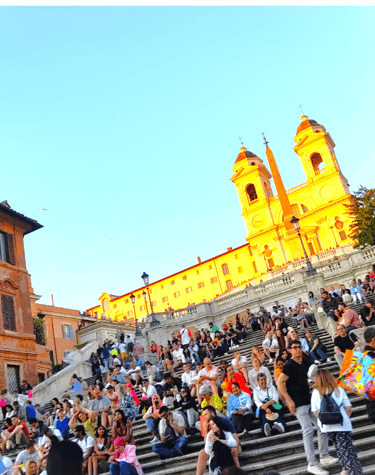
PIAZZA DI SPAGNA
🌟 Located in the heart of Rome, this iconic square is a place steeped in history, elegance, and timeless charm. Known worldwide as Piazza di Spagna, it captivates visitors with its architectural beauty and vibrant atmosphere.
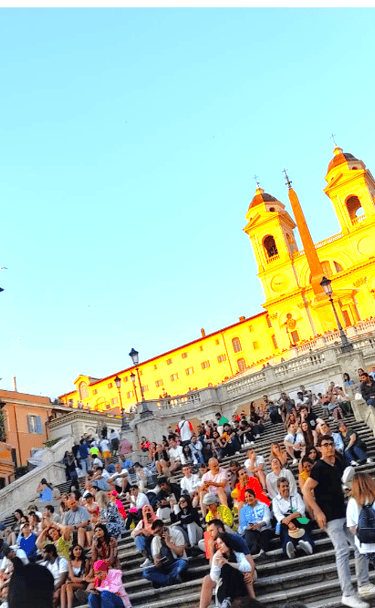
The square is most famous for the Spanish Steps (Scalinata di Trinità dei Monti)—a monumental staircase of 135 steps that gracefully ascends to the Church of Trinità dei Monti, a striking Renaissance church completed in 1585 under the patronage of King Louis XII of France.
🛠️ The Spanish Steps were designed by Francesco de Sanctis and constructed between 1723 and 1726, funded by a French diplomat Étienne Gueffier. Their elegant curves and scenic terraces have made them a beloved meeting spot for both locals and tourists for centuries. The staircase was intended to symbolically connect the Bourbon Spanish Embassy at the base with the French church above—an architectural gesture of diplomacy and unity.
⛲ At the center of the square lies the Fontana della Barcaccia, a charming fountain shaped like a half-sunken boat. It was sculpted in 1627–1629 by Pietro Bernini, father of the famed Gian Lorenzo Bernini.
According to legend, the fountain commemorates the Tiber River flood of 1598, during which a small boat was stranded in the area. Bernini’s design serves not only as a tribute to that event but also as a poetic reminder of nature’s unpredictable power and the vulnerability of human creations in its wake.
🎨 Piazza di Spagna is far more than a picturesque landmark—it has long been a cultural stage. Over the centuries, it has inspired poets like John Keats, who spent his final days in a house adjacent to the steps (now the Keats-Shelley Memorial House), and artists who found muse in its lively ambiance. The square has been immortalized in countless paintings, films, and literary works, becoming a symbol of Rome’s artistic soul.
🇪🇸 The name “Piazza di Spagna” derives from the Spanish Embassy to the Holy See, which has been located here since the 17th century, reinforcing the square’s diplomatic and international significance.
PIAZZA DI SPAGNA=SPANISH SQUARE. But You know the name as "SPANISH STEPS" .
🛍️ Today, Piazza di Spagna is also a luxury shopping destination, home to world-renowned fashion houses and boutiques such as Valentino, Tiffany & Co., Gucci, and Bulgari. It’s the perfect backdrop for your most stunning photos, blending historical grandeur with modern sophistication.
📸 Whether you're admiring the baroque architecture, relaxing on the steps, or indulging in high-end shopping, the square offers an unforgettable experience that bridges centuries of Roman life.
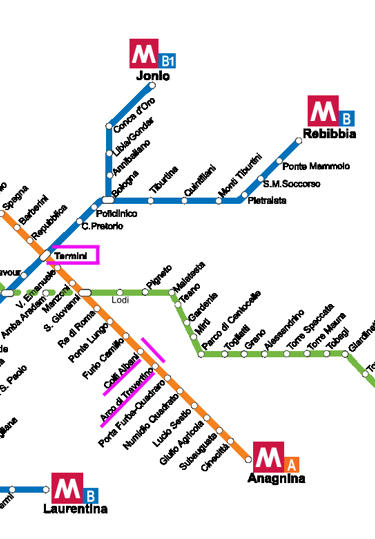
🚇 Getting there: Take Metro Line A and get off at the "SPAGNA" station. (This specific Metro Stop "SPAGNA" has been recently renovated . So now it's very modern and efficient . From "SPAGNA" You can reach TERMINI RAIL STATION in 3 Metro stops , very quick ).
METRO & PUBLIC TRANSPORT
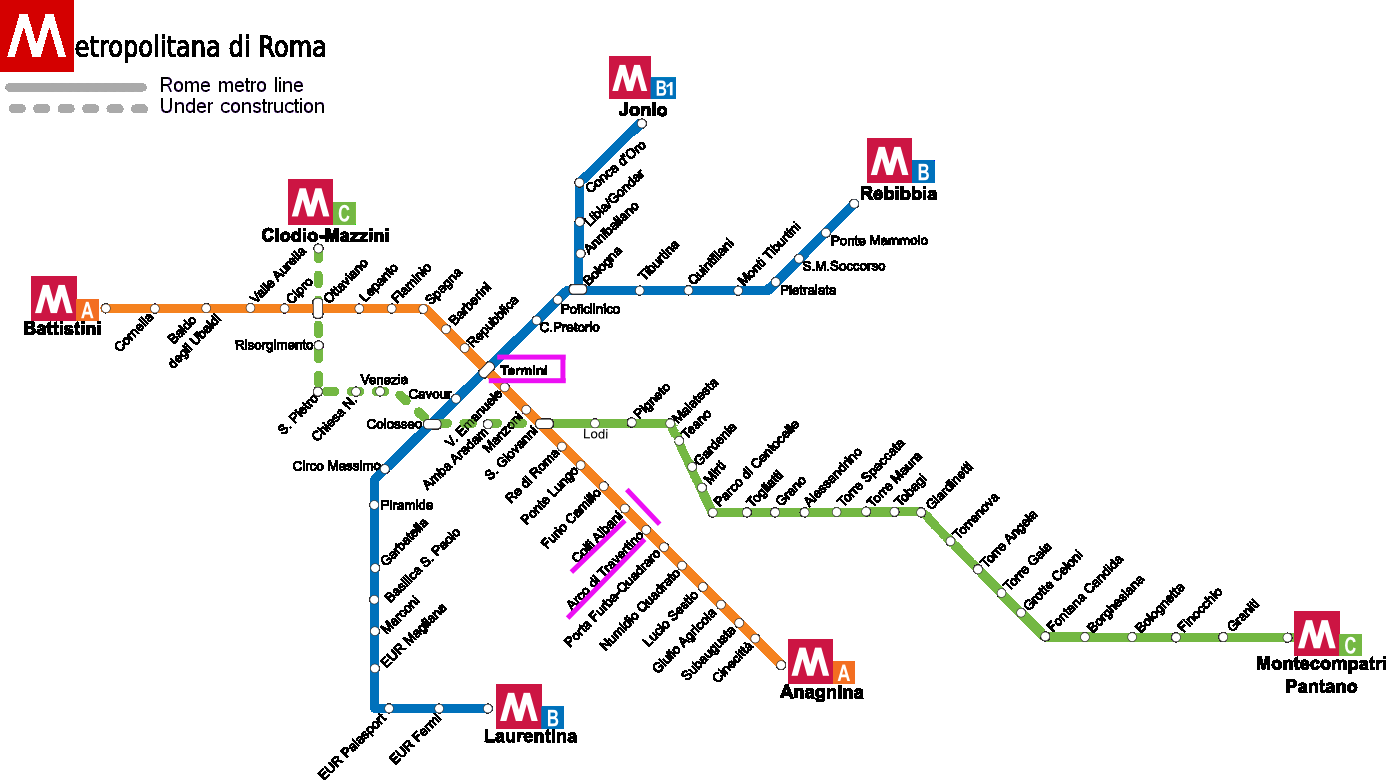
🚇 Rome has only three metro lines: Line A (red), Line B (blue), and Line C (greenish-yellow).
This limited network is not due to lack of demand, but rather the city's unique archaeological richness. Rome is essentially an open-air museum, and every time construction begins for a new metro line, ancient ruins and artifacts are often unearthed—sometimes halting work for years. Even today, excavations continue to reveal treasures from the Roman Empire, making infrastructure expansion a delicate balancing act between progress and preservation.
🕰️ Metro operating hours vary slightly depending on the line and day of the week. Generally:
First trains depart from all termini at 5:30 in the morning .
Last trains run until 23:30 from Sunday to Thursday, and until 1:30 AM on Fridays and Saturdays.
During peak hours, trains arrive every 2–5 minutes, while in the evening, intervals may stretch to 5–10 minutes.
🚉 Major railway stations in Rome include:
Termini Station – the central hub for metro, regional, and national trains.
Tiburtina Station – a key stop for high-speed trains and regional connections.
Trastevere Station – ideal for reaching the charming Trastevere district.
Tuscolana Station – serves southern neighborhoods and connects to regional lines.
🚌 Rome’s public transport system includes not just metro lines, but also buses, trams, and suburban railways. The bus network is extensive, covering nearly every corner of the city. Many buses operate late into the night, and Night Buses (marked with an “N”) ensure mobility even after metro services end.
🚋 Trams offer scenic and efficient travel on select routes, especially useful for reaching neighborhoods like San Lorenzo or Testaccio.
🎫 Tickets and passes are available for various durations:
Single ticket (BIT): valid for 100 minutes on all transport modes.
Daily, 3-day, and weekly passes: ideal for tourists staying longer.
Integrated tickets allow seamless travel across metro, bus, tram, and regional rail lines.
🚕 Taxis in Rome are white and clearly marked. Official taxis display their license number and fare rates on the doors. While convenient, taxis can be expensive during peak hours or in heavy traffic. It’s advisable to use official taxi stands or apps like “myTaxi” or “FreeNow” to avoid unauthorized drivers.
⚠️ Important tips for tourists:
Public transport can be crowded, especially during rush hours (7:30–9:30 AM and 5:30–7:30 PM).
Check for service updates or temporary closures, especially on holidays or during maintenance work.
🚇 This is the official website for PUBLIC TRANSPORT in Rome (Metro, Bus, Tram, and more): ATAC Roma – Public Transport : https://www.atac.roma.it/en/home
ROME, dear tourist friends, is a very large city in terms of area, so our first recommendation is to think about distances not in kilometers or as the crow flies, but only in terms of the Metro and Public Transport.
Only in the very historic center will you be able to walk and walk with all the monuments within reach. But be careful—the center is very, very expensive, and you might end up paying three times as much for a small and not-so-great accommodation. Instead, study the Metro system, especially Line A, and find a place to stay right near a Metro stop: you'll get a much larger space, pay far less, and in just a few minutes you'll be in the center and all over the city.
🍝 To enjoy the best food, avoid the center where quality is low and prices are sky-high. Instead, take Metro A to San Giovanni, where real Romans live—you’ll find lots of restaurants and pizzerias with fair prices and excellent quality. ✅ Safe areas: San Giovanni, Via Appia, Via Tuscolana, and the area around the Vatican.
🚇 This is the official website for PUBLIC TRANSPORT in Rome (Metro, Bus, Tram, and more): ATAC Roma – Public Transport : https://www.atac.roma.it/en/home
⚠️ Areas to avoid: all major stations like Termini Station and Trastevere Station, many parts of North Rome, and the southwest quadrant of the city.
🏛️ Rome has an unimaginable number of monuments, and you'd need at least 2–3 full weeks just to visit the most famous ones. We recommend using Instagram to discover lesser-known spots and hidden gems—often incredibly beautiful and free to visit. ✨ A key tip: see the main monuments both by day and by night! They look completely different, and you’ll be enchanted by the magic of how they transform. It’ll feel like seeing two separate monuments, and especially at night, the lighting effects will amaze you.
🏛️ Sightseeing Tips
Prebook major attractions: Reserve time slots for places like the Vatican Museums and Colosseum in advance. Look for “skip-the-line” tickets—they’re worth the extra euros.
Visit museums strategically: Many museums are closed on Mondays. Plan your itinerary accordingly and explore outdoor sites or neighborhoods on that day.
See monuments by day and night: Iconic landmarks like the Trevi Fountain and Colosseum transform under evening lights—it's like seeing two different places.
🚇 Getting Around
Use public transport wisely: Rome’s Metro system is efficient. Metro Line A connects many key areas, including the Vatican and San Giovanni.
Avoid driving: Traffic is chaotic and parking is scarce. Stick to Metro, buses, and walking.
Stay near a Metro stop: Accommodations outside the center are cheaper and often more spacious. You’ll still be just minutes away from the action.
🛏️ Where to Stay
Avoid Termini Station area: It’s convenient but not the safest or most charming part of town.
Safe and lively neighborhoods: Consider San Giovanni, Via Appia, or areas near the Vatican for a good mix of safety, local life, and access.
Avoid Centre area for price: It’s very very expensive to rent a house or guesthouse or hotel in the Centre . Better focus on other zones high quality but medium and low price like Street APPIA or Street TUSCOLANA or SAN GIOVANNI Zone . All METRO A is really Ok .
🗓️ How Long to Stay
Minimum of 3 days: You’ll need at least this to see the highlights. Five days allows for a deeper experience.
Use Instagram for hidden gems: Rome is full of lesser-known spots that are stunning and often free. For example " VILLA DEI QUINTILI " an ancient roman Villa that You can easily visit with Bus 118 .
🗓️ Rome in 5 Days:
The Perfect Itinerary
Day 1: Ancient Rome
🏟️ Colosseum – Start with Rome’s most iconic monument.
🏛️ Roman Forum & Palatine Hill – Explore the heart of ancient Roman life.
🏛️ Capitoline Hill & Museums – Great views and classical art.
🏰 Piazza Venezia & Vittoriano Monument – Climb for panoramic city views.
Day 2: Vatican City
🎨 Vatican Museums & Sistine Chapel – Book early to skip the lines.
⛪ St. Peter’s Basilica – Climb the dome for breathtaking views.
🏰 Castel Sant’Angelo – Walk along the Tiber River and enjoy the bridge views.
Day 3: Historic Center
🏛️ Pantheon – A marvel of ancient engineering.
⛲ Trevi Fountain – Toss a coin for good luck.
🖼️ Piazza Navona – Baroque beauty and street artists.
🛍️ Via Condotti & Spanish Steps – Elegant shopping and people-watching.
🌳 Villa Borghese Gardens – Rent a bike or stroll through the park.
Day 4: Local Neighborhoods & Hidden Gems
🧺 Campo de' Fiori Market – Morning buzz and fresh produce.
🍷 Trastevere – Wander cobbled streets and dine like a local.
🌸 Aventine Hill – Visit the Orange Garden and the famous keyhole view.
🕍 Roman Catacombs – A hauntingly beautiful underground experience.
Day 5: Day Trip or Leisure
🏛️ Tivoli – Visit Villa d’Este and Villa Adriana for Renaissance and Roman splendor.
🌋 Pompeii & Mount Vesuvius – If you're up for a longer adventure.
🧘♂️ Or just relax: revisit favorite spots, enjoy a long lunch, or shop for souvenirs.






🎟️ Types of Tickets Available
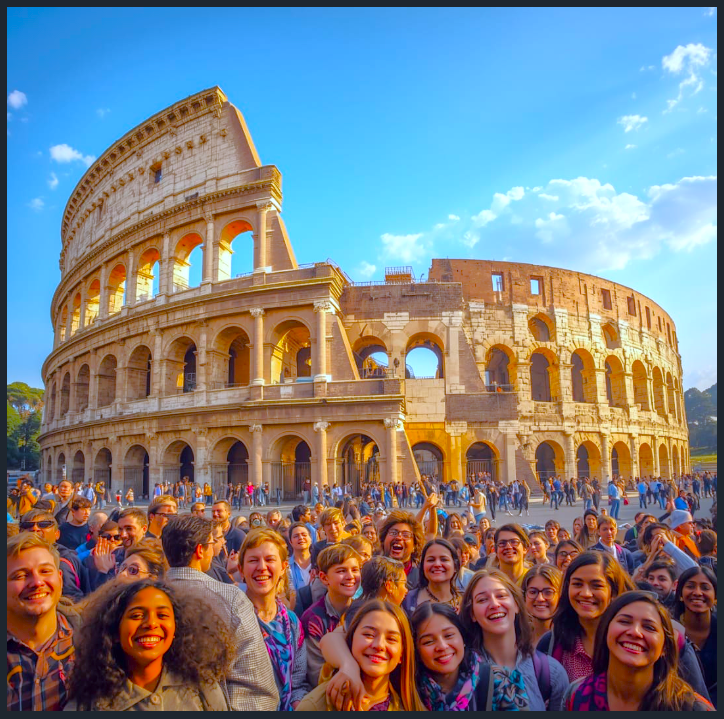
Standard Admission: Grants access to the Colosseum, Roman Forum, and Palatine Hill. This is the basic ticket for exploring the archaeological heart of ancient Rome.
Skip-the-Line Ticket: Allows you to bypass long queues at the entrance, saving valuable time—especially during peak tourist seasons.
Guided Tour: Includes a professional guide, often an archaeologist or historian, and typically covers exclusive areas such as the arena floor and underground chambers.
Roma Pass: A city card that includes entry to the Colosseum and other major attractions like the Vatican Museums, Pantheon, and St. Peter’s Basilica, along with free public transport and discounts at select shops and restaurants.
📌 Useful Tips for Visitors
Book online in advance to avoid sold-out dates and long lines. The Colosseum receives over 7 million visitors annually, and tickets can sell out quickly.
Check if your ticket includes access to the arena and underground levels, which are among the most fascinating parts of the monument.
Some tickets offer free cancellation up to 24 hours before your visit, providing flexibility for changing plans.
Visit early in the morning or late in the afternoon to avoid crowds and enjoy softer lighting for photos.
🛒 Where to Buy Tickets
ColosseodiRoma.it – Offers standard and skip-the-line tickets, guided tours, and audio guides.
Colosseo-Roma.it – Features priority access, guided experiences, and combo passes like the Roma City Pass.
iMuseidiRoma.it – Aggregates ticket options via platforms like GetYourGuide and Tickets, and provides museum guides and tour suggestions.
🚇 This is the official website for PUBLIC TRANSPORT in Rome (Metro, Bus, Tram, and more): ATAC Roma – Public Transport : https://www.atac.roma.it/en/home
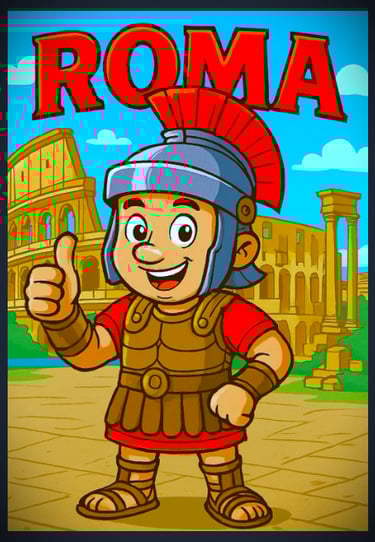
HERE DISCOVER : Museums , Metro & Italian Foods
A colorful guide for tourists, filled with photos, stories, and tips about Rome to make your visit unforgettable and easy.
Discover the city’s most captivating places—from historic monuments like the Colosseum and the Pantheon, to the beauty of its stunning parks and piazzas. Immerse yourself in the lively atmosphere of local markets, where you can savor culinary delights rooted in Roman tradition. Every corner of this city tells a story, and our guide will lead you through the curiosities and hidden secrets that make Rome so special.
Don’t forget to visit the museums and art galleries, which house priceless masterpieces. Whether you're a history lover, an art enthusiast, or simply seeking adventure, this guide is designed to offer you a unique and memorable experience.


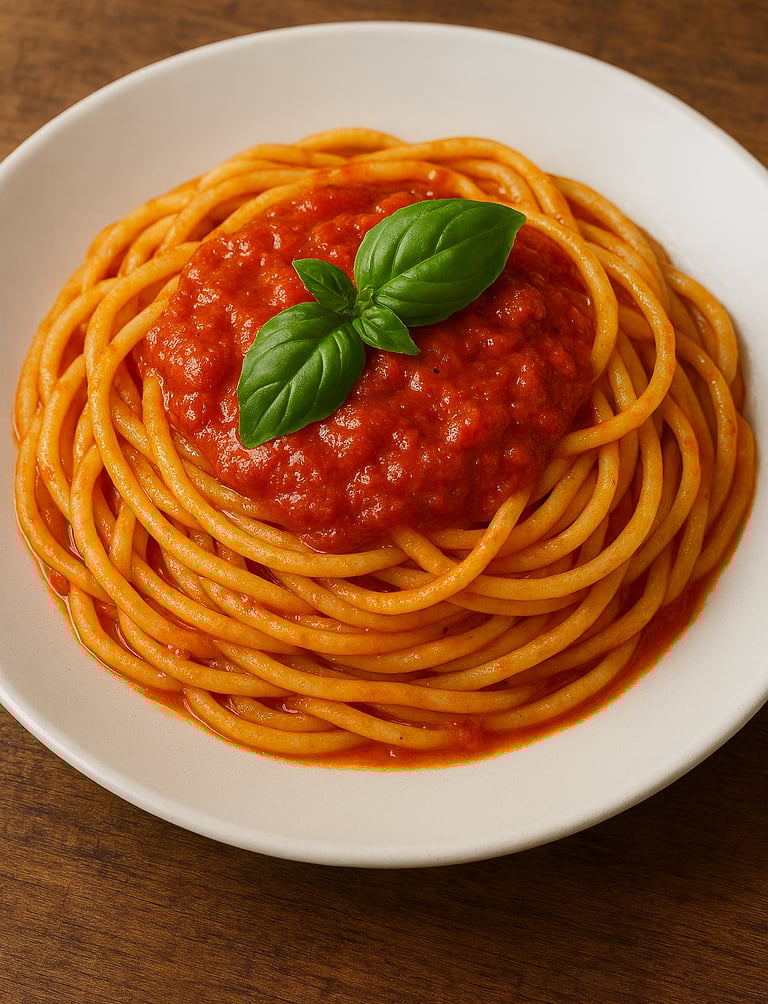
Italian and Roman Foods & Dishes You Absolutely Must Try
🏛️ Must-See Museums
1.) - Vatican Museums and Sistine Chapel – A global treasure of art, featuring masterpieces by Michelangelo and Raphael. Located within Vatican City, this vast complex includes the Raphael Rooms, the Gallery of Maps, and the breathtaking Sistine Chapel ceiling painted by Michelangelo. Tip for visitors: Book tickets online in advance to skip the long lines, and consider a guided tour to fully appreciate the historical and artistic context.
2.) - Borghese Gallery – An extraordinary collection of sculptures and paintings, including works by Bernini and Caravaggio. Nestled in the heart of Villa Borghese Park, this museum requires reservations, often days ahead. Don’t miss Bernini’s dynamic sculptures like Apollo and Daphne, and Caravaggio’s intense paintings. Tip: Combine your visit with a stroll through the surrounding gardens.
3.) - Capitoline Museums – The first public museum in history, home to the Capitoline Wolf and the statue of Marcus Aurelius. Located on Piazza del Campidoglio, designed by Michelangelo, these museums offer a deep dive into ancient Roman civilization. Tip: The rooftop café offers panoramic views of the Roman Forum.
4.) - MAXXI – National Museum of 21st Century Arts, an icon of contemporary architecture. Designed by Zaha Hadid, MAXXI showcases cutting-edge exhibitions in art, photography, and design. Tip: Check the museum’s calendar for temporary exhibits and events, and explore the surrounding Flaminio district, known for its modern vibe.
5.) - National Gallery of Modern and Contemporary Art – Modern and contemporary art housed in a neoclassical palace. Located near Villa Borghese, this gallery features Italian artists like Giorgio de Chirico and Giacomo Balla, alongside international names. Tip: It’s usually less crowded than other museums, making it ideal for a relaxed visit.
6.) - National Roman Museum – Spread across multiple sites (Palazzo Massimo, Baths of Diocletian, Crypta Balbi), it tells the story of ancient Rome. Each location offers a unique perspective: Palazzo Massimo is rich in frescoes and mosaics, Terme di Diocleziano showcases Roman baths, and Crypta Balbi explores urban archaeology. Tip: A combined ticket grants access to all sites within a week.
7.) - Centrale Montemartini – Classical statues displayed in a former power plant. This unusual museum juxtaposes ancient Roman sculptures with industrial machinery, creating a striking contrast. Tip: It’s a hidden gem, perfect for those seeking something off the beaten path.
8.) - Museum of the Ara Pacis – The Augustan Altar of Peace, housed in a modern building. This beautifully preserved altar celebrates Emperor Augustus’s reign. The museum’s sleek design by Richard Meier enhances the experience. Tip: Visit at sunset for stunning light through the glass walls.
9.) - Museum of Rome in Trastevere – Roman popular life between the 18th and 20th centuries. Located in the charming Trastevere district, this museum offers insights into everyday Roman traditions, festivals, and crafts. Tip: Combine your visit with an evening walk through Trastevere’s lively streets and trattorias.
10.) - Napoleonic Museum – Private collection of the Bonaparte family. This elegant museum near Piazza Navona displays portraits, furniture, and memorabilia from Napoleon’s relatives who lived in Rome. Tip: Entry is free, making it a great stop for history buffs on a budget.
Rome is an open-air museum, but these places offer unique and in-depth experiences. Whether you're passionate about art, history, or simply curious, each visit is a journey through time and beauty.
🖼️ Thematic & Curious Museums
11.) - Leonardo Da Vinci Experience Museum – Interactive machines and reproductions of his paintings. Located near the Vatican, this museum offers a hands-on journey through Leonardo’s inventions, with over 50 working models built from his original sketches. Visitors can also admire life-size reproductions of masterpieces like The Last Supper and Mona Lisa. It’s ideal for families and curious minds. Open daily, tickets start at €12, and audio guides are included.
12.) - Museum of Illusions – A visual and interactive experience for all ages. Situated on Via Merulana 17, this museum features over 70 optical illusions, including the Vortex Tunnel, Anti-Gravity Room, and Infinity Room. It’s perfect for kids and adults alike. Booking is required on weekends and holidays. Average visit time is 1 hour.
13.) - Jewish Museum of Rome – History of the Roman Jewish community. Located beneath the Great Synagogue in the Jewish Quarter, this museum showcases 2,000 years of Jewish life in Rome, including artifacts from the Ghetto era (1555–1870), religious objects, manuscripts, and virtual reconstructions of the old Ghetto. Guided tours include access to the Spanish Synagogue. Open Sunday to Friday, closed Saturdays. €11.
14.) - Museum of the Roman Republic and Garibaldi Memorial – Tells the story of the Risorgimento and Garibaldi. Located at Porta San Pancrazio on Janiculum Hill, this museum explores the short-lived Roman Republic of 1849 through multimedia exhibits, battle models, and personal items of Giuseppe Garibaldi. Entry is free, and it’s open Tuesday to Sunday. Combine your visit with a walk to the Garibaldi Monument and panoramic views of Rome.
15.) - National Etruscan Museum of Villa Giulia – Etruscan art and culture in a Renaissance villa. Housed in a villa built by Pope Julius III, this museum contains masterpieces like the Sarcophagus of the Spouses, Apollo of Veii, and gold tablets from Pyrgi. It’s the most important Etruscan museum in Italy. Located near Villa Borghese, open Tuesday to Sunday. Tickets: €10 full, €2 reduced.
16.) - Giovanni Barracco Museum of Ancient Sculpture – Collection of ancient Egyptian, Greek, and Roman art. This free-entry museum on Corso Vittorio Emanuele showcases over 400 sculptures from civilizations including Assyria, Phoenicia, Cyprus, and Rome. Donated by collector Giovanni Barracco in 1902, it’s a hidden gem for lovers of classical art.
17.) - Boncompagni Ludovisi Museum – Fashion and decorative arts from the 19th–20th centuries. Located in an Art Nouveau villa near Via Veneto, this museum features furniture, paintings, and fashion from designers like Gattinoni, Valentino, and Balestra. Entry is €6, and it’s open Tuesday to Sunday.
18.) - Pietro Canonica Museum – Sculptures and historic interiors in Villa Borghese. This museum is the former home and studio of Pietro Canonica, a renowned sculptor. It includes original furnishings, portraits, and monumental sculptures. Located in the Fortezzuola, it’s free to enter and offers guided tours of the artist’s private apartment.
19.) - Alberto Moravia House Museum – Home of the writer, with furniture and manuscripts. Overlooking the Tiber River, this penthouse preserves the life and work of Alberto Moravia, one of Italy’s most influential 20th-century writers. Visitors can see his Olivetti typewriter, African masks, and personal library. Entry is free with advance booking for guided tours.
20.) - Carlo Bilotti Museum – Contemporary art in the Orangery of Villa Borghese. This museum houses works by Giorgio de Chirico, Andy Warhol, and Giacomo Manzù. Located in the restored Aranciera, it also hosts temporary exhibitions. Open Tuesday to Sunday.
🏛️ Archaeological Sites in Rome
21.) - Colosseum and Roman Forum – Eternal symbols of Imperial Rome. These iconic landmarks are part of the Parco Archeologico del Colosseo. The Colosseum, built in 80 AD, hosted gladiator games and public spectacles. The Roman Forum was the heart of political and religious life for over a millennium. 🎟️ Tickets: Combined entry for Colosseum, Forum, and Palatine Hill starts at €18. Book in advance to avoid long lines. 🕒 Opening hours: 9:00–19:15 (last entry at 18:15). 🚇 Metro: Line B, stop “Colosseo”.
22.) - Palatine Hill – The legendary birthplace of Rome, with imperial palaces. This is where Romulus is said to have founded Rome. The hill features ruins of the Domus Augustana, Domus Flavia, and House of Livia. 🌳 It’s a peaceful area for walking, with panoramic views over the Forum. 🎟️ Included in the Colosseum ticket. 🚌 Bus lines 75, 81, 85, 87, and 118 stop nearby.
23.) - Pantheon – Roman temple turned church, housing Raphael’s tomb. Built between 27 BC and 125 AD, the Pantheon is the best-preserved ancient Roman building. Its massive dome and oculus are architectural marvels. 🎟️ Entry: €5 (free for EU citizens under 18). 🕒 Open daily 9:00–19:00. 📍 Located in Piazza della Rotonda, near Largo Argentina.
24.) - Castel Sant’Angelo – Mausoleum, fortress, and museum with views of the Tiber. Originally built as Emperor Hadrian’s tomb in 139 AD, it later became a papal fortress and prison. Today it houses a museum and offers stunning rooftop views. 🎟️ Entry: €16, reduced €2 for EU citizens aged 18–25. 🕒 Open Tuesday–Sunday, 9:00–19:30. 🚶 A short walk from Vatican City.
25.) - Baths of Caracalla – Majestic ruins of imperial Roman baths. Built in the 3rd century AD, these baths could host up to 6,000 people daily. Visitors can explore the caldarium, frigidarium, and underground service areas. 🎟️ Entry: €8–€12. Free on the first Sunday of each month. 🕒 Open daily (except Monday), hours vary seasonally. 🚇 Closest metro: Circo Massimo.
26.) - Domus Aurea – Nero’s lavish palace with frescoes and surprising architecture. After the Great Fire of 64 AD, Emperor Nero built this opulent residence. Today, visitors can explore its underground halls with augmented reality tours. 🎟️ Guided tours only, available Friday–Sunday. 📍 Entrance via Colle Oppio Park, near Via Labicana. 🕶️ Book in advance for immersive multimedia experiences.
27.) - Appian Way (Via Appia Antica – Ancient Roman road with catacombs and mausoleums. Built in 312 BC, this road connected Rome to Brindisi. It’s lined with tombs, Christian catacombs (San Sebastiano, San Callisto), and historic villas. 🚲 Best explored by bike; rentals available near the Visitor Center. 🕒 Closed to traffic on Sundays. 📍 Start at Porta San Sebastiano or the Church of Domine Quo Vadis.
28.) - Villa dei Quintili – Imperial residence surrounded by greenery. Located at the 5th mile of the Appian Way, this villa belonged to two consuls before being seized by Emperor Commodus. 🏛️ Features thermal baths, a theater, and a wine cellar. 🎟️ Entry included with Appia Antica ticket. 🕒 Open Tuesday–Sunday. 🚇 Metro A to Colli Albani, then bus 664 or 118.
29.) - Trajan’s Markets – Museum of the Imperial Forums with Roman commercial structures. Built in the 2nd century AD, this multi-level complex includes administrative offices, shops, and the Museum of the Imperial Fora. 🎟️ Entry: €11. 📍 Via Quattro Novembre, near Piazza Venezia. 🕒 Open daily 9:30–19:30.
30.) - Ara Pacis Augustae – Celebratory altar of Augustan peace. Commissioned in 13 BC, this marble altar features intricate reliefs of imperial processions and mythological scenes. 🏛️ Housed in a modern museum designed by Richard Meier. 🎟️ Entry: €10–€12. 📍 Lungotevere in Augusta, near Piazza del Popolo. 🕒 Open daily 9:30–19:30.
Here is a list of the 30 best museums and tourist attractions to visit in Rome, designed to offer a diverse overview of art, history, archaeology, and curiosities.


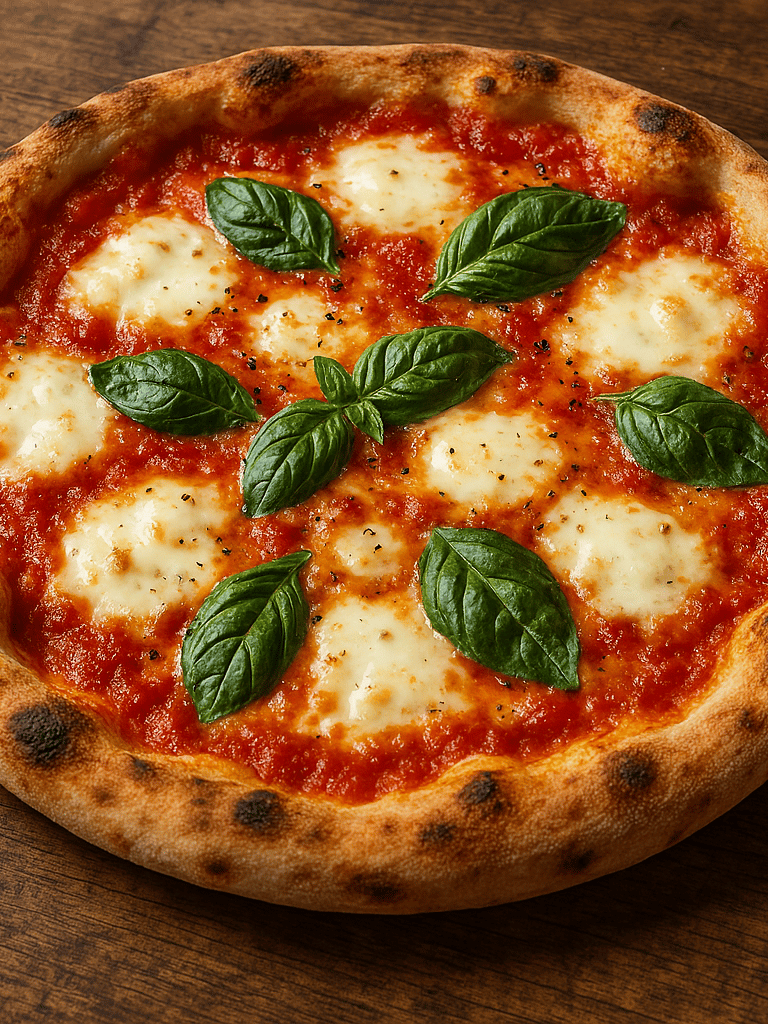




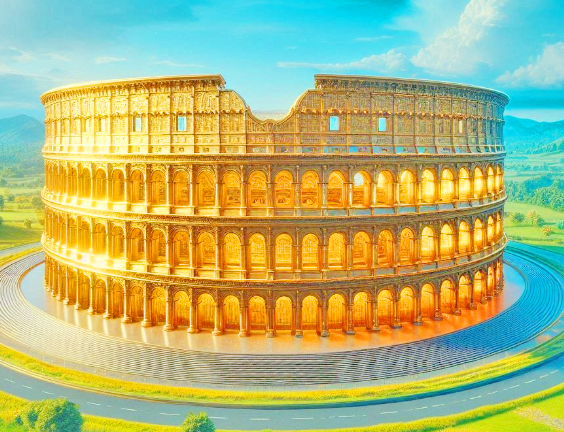


🍝 Many of our tourist friends often ask us what to eat in Rome and Italy—authentic, delicious dishes that you’ll remember for a lifetime.
Italy is world-renowned for its extraordinary cuisine, which varies significantly from region to region. In Rome, there are several must-try dishes that embody the city’s culinary heritage.
Traditional Roman Dishes You Must Try
Pasta alla Carbonara: Made with eggs, Pecorino Romano cheese, guanciale (cured pork cheek), and black pepper. No cream—just rich, velvety flavor. This dish is a true symbol of Roman tradition and simplicity.
Pasta all’Amatriciana: A savory tomato-based pasta with guanciale and Pecorino Romano, originating from the town of Amatrice.
Roman-style Pizza: Thin, crispy crust with simple toppings. Try the Pizza Bianca, topped with rosemary and olive oil—perfect for snacking while strolling through historic streets.
Supplì: Fried rice balls filled with ragù and mozzarella. Crispy outside, gooey inside—ideal for aperitivo.
Carciofi alla Romana: Roman-style artichokes cooked with garlic, mint, and olive oil. A seasonal delicacy often served in trattorias.
🍽️ Other Iconic Italian Dishes Worth Tasting
Risotto alla Milanese: A creamy rice dish from Milan, colored and flavored with saffron.
Pasta alla Norma: A Sicilian classic with eggplant, tomato sauce, ricotta salata, and basil.
Tortellini or Ravioli: Served in broth or with cream and ham—comfort food from Emilia-Romagna.
Gnocchi di Patate: Soft potato dumplings, often served with tomato sauce, pesto, or butter and sage.
Tiramisù: Italy’s most famous dessert, invented in the Veneto region. Layers of coffee-soaked ladyfingers, mascarpone cream, and cocoa—pure bliss.
🍕 Don’t Miss Neapolitan Cuisine
Neapolitan Pizza: Soft, chewy crust with a high edge, baked in a wood-fired oven.
Paccheri ai Frutti di Mare: Large pasta tubes with fresh seafood.
Frittura di Pesce: Lightly fried calamari, shrimp, and anchovies—perfect by the sea or in a Roman seafood trattoria.
🍨 Special Mention: Italian Gelato The Italian gelato cone is a must-have. Its creamy texture and intense flavor are unmatched—try pistachio, hazelnut, or seasonal fruit varieties.
🚇 Where to Eat Don’t limit yourself to the city center! Hop on Metro Line A and head to San Giovanni. Along Via Appia, you’ll find countless restaurants and pizzerias offering high-quality meals at fair prices. For a more lively and picturesque experience, explore Trastevere, where the cobbled streets are lined with eateries serving Roman and Italian specialties in a vibrant atmosphere.
🏆 Top 10 Moderately Priced Restaurants in Rome (According to Tripadvisor)
Here are ten highly rated spots offering excellent food at reasonable prices:
🍽️ DOC EnoBistrot Italian, BarAuthentic Roman dishes / Alvaro Ristorante Italian, Mediterranean Known for traditional pasta / Adesso Vineria Bistrot Central-Italian, Healthy Grilled octopus, cozy vibe / Lume - Osteria Alle Scalette Italian, Mediterranean Hidden gem with great ambiance / Come 'na Vorta – Pasta e Vino Roman, Italian Famous for cacio e pepe & tiramisù / Da Cicero Pizza, Dining Bar Excellent Roman food & wine / Cipasso Italian, Mediterranean Great seafood and pasta / Sentori Vineria Di Quartiere Italian, Mediterranean Local favorite, warm atmosphere / Ristorante Ai Cocci Italian, Pizza Homemade pasta, friendly service / Sfiziarte Italian, Mediterranean Pasta and tiramisù praised
🍕 Top 5 Pizzerias in Central Rome (Centro Storico)
Pizza Florida Pizza al taglio, crispy Roman style € / Casa MancoCreative toppings, artisanal dough € / Pizza e Mozzarella Pay-by-weight slices, fast and tasty € / Pinsitaly Trevi Roman “pinsa”, light and crunchy €€ / Amerina la Pizzetta Cozy spot, great for quick bites € .
🍕 Top 5 Pizzerias in "San Giovanni" Area
Tira e Molla High-rated, Roman classics, great service €€ / Pizzeria Il Grano Hidden gem, fast service, great dough € / La Pecora Pazza Friendly vibe, flavorful pizza €€ / Re di Roma Pizza Local favorite, fresh ingredients € / Al Grottino Unique style between Roman & Neapolitan €€ .
All METRO : A , B , C
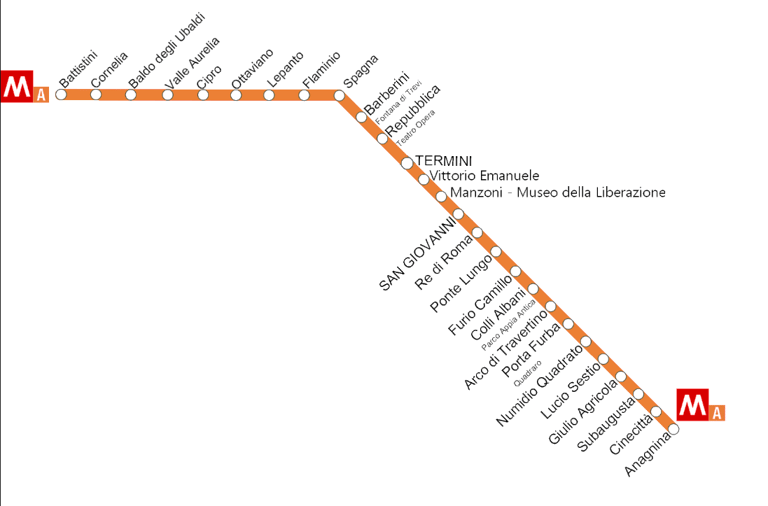
METRO A:
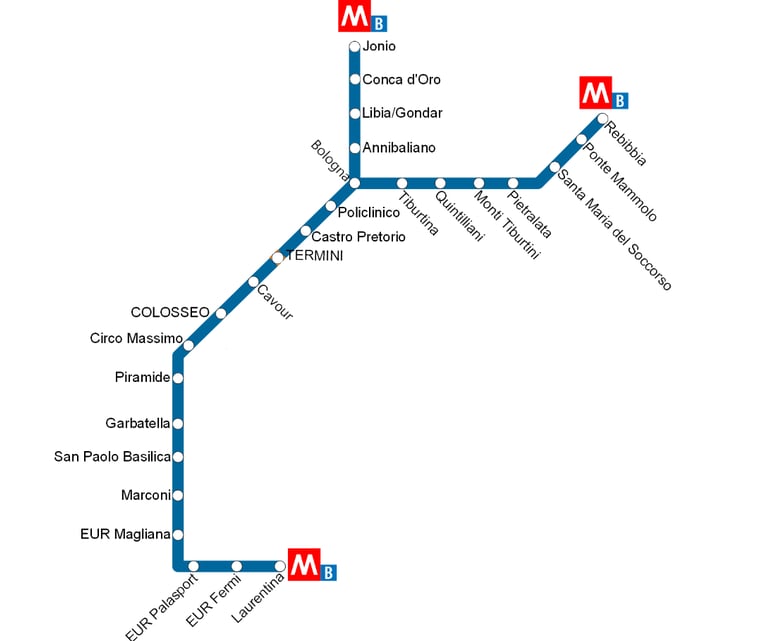
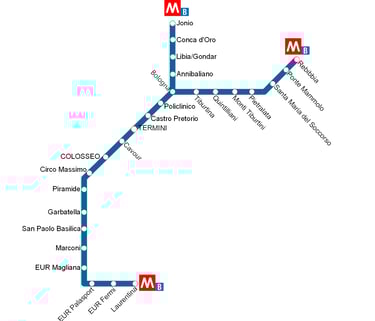
METRO B:
DISCOVER ROME
Here : MONUMENTS & PUBLIC TRANSPORT & EVENTS AND TIPS
MONUMENTS
🏛️ Explore the History of Rome’s Main Monuments
Discover the fascinating history behind Rome’s most iconic landmarks with clear descriptions and evocative imagery. From the Colosseum and Trevi Fountain to Spanish Steps, the Pantheon, and countless other marvels, each monument tells a story that spans centuries.
These sites are not only architectural masterpieces but also symbols of Rome’s enduring legacy. For example:
The Colosseum, built in 80 AD, once hosted gladiatorial games and public spectacles. Today, it offers guided tours including access to the underground chambers.
The Pantheon, originally a Roman temple, is renowned for its massive dome and oculus, and now serves as a church and burial site for Italian kings and artists.
The Trevi Fountain, completed in 1762, is a Baroque masterpiece where tossing a coin ensures your return to Rome.
/
🏛️ Hidden Gems: Villa dei Quintili
While the most famous monuments draw crowds, Rome also hides treasures off the beaten path. One such gem is the Villa dei Quintili, the most significant ancient Roman villa after the Domus Aurea. Located in the peaceful Statuario neighborhood, it’s easily accessible via Bus 118.
Built in the 2nd century AD and once owned by the wealthy Quintili brothers, the villa was later seized by Emperor Commodus. Today, visitors can explore its vast ruins, thermal baths, and panoramic views of the Roman countryside. It’s part of the Appian Way Archaeological Park, making it ideal for combining with a scenic walk or bike ride.
/
🏛️ The Pyramid of Cestius and a Gateway to the Sea
Another lesser-known but striking monument is the Pyramid of Cestius, a 36-meter-high funerary pyramid built in 12 BC for the magistrate Gaius Cestius. It’s located near the Piramide Metro Station (Line B) and is one of the few Egyptian-style structures in Rome.
From the same metro stop, you can catch the Roma-Lido urban train, which takes you directly to Ostia, Rome’s seaside district. Ostia offers both beach relaxation and historical exploration at Ostia Antica, an ancient Roman port city with remarkably preserved ruins including baths, temples, and a theater.
/
🏛️ Circus Maximus and the Mouth of Truth
Taking Metro Line B to Circo Massimo Station, you’ll arrive at the Circus Maximus, once the largest stadium in ancient Rome, used for chariot races and public events. It’s located near the Roman Forum and Colosseum, making it a perfect addition to a historical walking tour.
Just a short walk away is the legendary Bocca della Verità (Mouth of Truth), a marble mask said to bite the hand of liars. It’s housed in the Church of Santa Maria in Cosmedin, and was famously featured in the film Roman Holiday. Entry is free, though a small donation is appreciated for photos.
/
🕊️ Visiting the Vatican
To reach Vatican City, simply take Metro Line A and get off at Ottaviano Station. This area is highly tourist-friendly, with plenty of shops, restaurants, and a strong police presence ensuring safety. Recent urban renewal projects have improved sidewalks, lighting, and accessibility.
Key Vatican highlights include:
St. Peter’s Basilica: Climb to the dome for one of the best panoramic views of Rome.
Vatican Museums: Home to the Sistine Chapel, Raphael Rooms, and thousands of priceless artworks.
St. Peter’s Square: A grand open space ideal for photos and spiritual reflection.
/
🌄 Panoramic Views of Rome
Rome offers breathtaking vistas from several elevated spots. Here are three must-see viewpoints:
Domus Aurea Park: Located near the Colosseum, this green space offers archaeological ruins and a peaceful atmosphere. Entry is free, and guided tours of Nero’s palace are available.
Gianicolo Hill: Just above Trastevere, this hill provides sweeping views of the city. Every day at noon, a cannon fires—a tradition dating back to 1847. It’s a romantic spot, especially at sunset.
Pincian Terrace (Terrazza del Pincio): Overlooking Piazza del Popolo, this viewpoint is inside Villa Borghese Park and offers stunning views of the Vatican and city skyline. It’s ideal for photography and evening strolls.
PUBLIC TRANSPORT
🚉 Updated Information on Rome’s Public Transportation
Rome offers a wide and integrated public transport system that includes metro lines, buses, trams, and urban trains, all operated by ATAC, the city’s transport authority. The system is designed to connect major tourist attractions, neighborhoods, and transit hubs efficiently.
The main train station is Roma Termini, located in the heart of the city. It serves as the central hub for:
National and regional trains, including high-speed Frecciarossa and Italo services.
Leonardo Express: A direct train from Fiumicino Airport to Termini, running every 15–30 minutes (€14, 32-minute ride).
Metro Lines A and B, accessible without leaving the station.
/
🚉 Tuscolana Station: A Quieter Alternative
Another useful station is Roma Tuscolana, which is less crowded than Termini. You can reach it by taking Metro Line A and getting off at Ponte Lungo. From there, it’s a short walk to the station, which also connects to Fiumicino Airport via the FL1 regional train (€8, slower but budget-friendly).
Tuscolana is ideal for travelers staying in southern Rome or looking for a quieter transit experience.
/
✈️ Rome’s Airports: Fiumicino and Ciampino
Rome has two main airports:
Fiumicino (Leonardo da Vinci Airport): The largest and most international, located ~30 km from the city center.
Ciampino Airport: Smaller, mainly serving low-cost airlines like Ryanair and Wizz Air.
To reach your accommodation from either airport, allow at least 1 to 1.5 hours for baggage claim and transit. Transport options include:
Leonardo Express (Fiumicino to Termini)
FL1 regional train (Fiumicino to Tuscolana, Trastevere, Ostiense)
Terravision or SIT shuttle buses (€6–€7)
Private transfers or taxis (regulated fares from Fiumicino: €50 to central Rome)
/
🛡️ Safety Tips for Tourists
Rome is generally a safe city, especially in tourist areas. Violent crime is rare, but petty theft (especially pickpocketing) is common in crowded places like:
Metro trains and stations
Buses, especially Bus 64 (Termini to Vatican)
Major attractions like the Colosseum and Trevi Fountain
Tips to stay safe:
Use anti-theft backpacks or money belts
Keep valuables in front pockets or zipped bags
Avoid displaying expensive items like jewelry or cameras
Be cautious of fake police officers or aggressive street vendors
Use official taxis or apps like FreeNow or Uber
Police presence may not be highly visible, but undercover officers are active in tourist zones.
Emergency number: 112 (European emergency services)
/
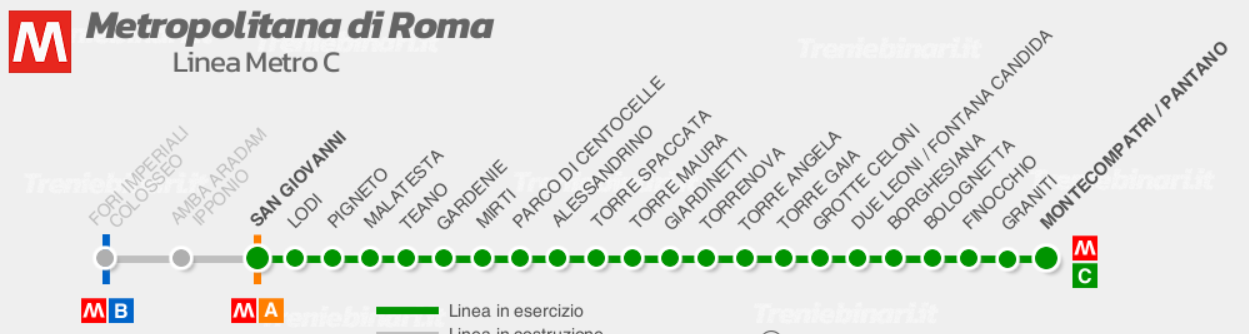
🚇 Metro C: Rome’s Third Metro Line
Rome’s Metro Line C is currently under expansion. As of now, it runs from Pantano to San Giovanni, where you can transfer to Metro Line A. The extension toward the Colosseum is underway, with expected completion in late 2025.
During construction, expect evening service interruptions and replacement buses (MC and MC3). Check updates on ATAC’s official website for schedules and service alerts.
Once completed, Metro C will offer direct access to the Colosseum and Roman Forum, improving connectivity for tourists.
/
🎫 Tickets, Passes, and Apps
Rome’s public transport uses a unified ticketing system:
Single ticket: €1.50, valid for 100 minutes across metro, bus, and tram
24-hour pass: €7
48-hour pass: €12.50
72-hour pass: €18
Weekly pass (CIS): €24
Tickets can be purchased at:
Metro stations (ticket machines)
Newsstands and tobacco shops (tabacchi)
ATAC booths
Apps like Moovit, Probus, TicketAppy, and Tap&Go
Always validate your ticket when boarding buses or entering metro gates.
🚇 This is the official website for PUBLIC TRANSPORT in Rome (Metro, Bus, Tram, and more): ATAC Roma – Public Transport : https://www.atac.roma.it/en/home
🎉 Events and Tips
Rome hosts a wide variety of events throughout the year, thanks to its constant influx of visitors from around the world. From religious festivals to cultural celebrations, concerts, exhibitions, and street performances, there’s always something happening in the Eternal City.
While events take place across the city, the majority are concentrated in the historic center, especially around areas like Piazza Venezia, Via dei Fori Imperiali, and Campo de' Fiori. These locations are easily accessible by public transport and often serve as the backdrop for parades, open-air concerts, and seasonal markets.
/
🏛️ Rome’s Birthday – April 21: A Must-See Celebration
One of the most spectacular and unique events is Rome’s Birthday, celebrated every year on April 21, marking the legendary founding of the city in 753 BC by Romulus. Known as Natale di Roma, this celebration includes:
A grand parade with hundreds of participants dressed in authentic Roman attire, including legionnaires, senators, Vestal Virgins, and gladiators.
Historical reenactments at Circus Maximus, featuring ancient rituals, battles, and cultural demonstrations.
Free entry to many museums and archaeological sites.
A light phenomenon at the Pantheon, where at noon the sun aligns perfectly through the oculus to illuminate the entrance—a symbolic moment designed by Emperor Augustus2.
The event is organized by the Gruppo Storico Romano, and it’s completely free. It’s a once-in-a-lifetime experience that immerses you in the spirit of ancient Rome.
/
🌞 Summer in Rome: Festivals, Food, and Nightlife
Summer in Rome is vibrant and full of life. From June to September, the city hosts dozens of festivals and local fairs. Highlights include:
Lungo il Tevere Festival: Along the banks of the Tiber River, this open-air event features pop-up restaurants, live music, artisan markets, and street performances. It runs from June to early September, and is ideal for evening strolls4.
Roma Summer Fest: Held at the Auditorium Parco della Musica, this music festival features international artists across genres like rock, jazz, and classical.
Festa de’ Noantri in Trastevere (mid-July): A traditional neighborhood festival with processions, concerts, and fireworks, celebrating the Madonna del Carmine.
Cinema in Piazza: Free outdoor film screenings in iconic locations like Piazza San Cosimato and Monte Ciocci, organized by the Piccolo America Foundation.
Trastevere, with its cobbled streets and lively piazzas, becomes a hub of activity in summer. It’s perfect for dining al fresco, enjoying gelato, and soaking in the local atmosphere.
/
🖼️ Free Museums: First Sunday of Every Month
Here’s a valuable tip for budget-conscious travelers: On the first Sunday of every month, many of Rome’s top museums and archaeological sites offer free admission. This initiative, called Domenica al Museo, includes:
Colosseum, Roman Forum, and Palatine Hill
Borghese Gallery (booking required, €2 fee)
Baths of Caracalla
Castel Sant’Angelo
National Roman Museum (Palazzo Massimo, Palazzo Altemps, Crypta Balbi)
Villa Giulia (Etruscan Museum)
Ostia Antica
Hadrian’s Villa and Villa d’Este in Tivoli
⚠️ Note: Entry is first-come, first-served, and lines can be long. Arrive early and plan to visit 2–3 sites to make the most of the day.
EVENTS AND TIPS



Important Telephone Numbers in ITALY
Only for true necessities
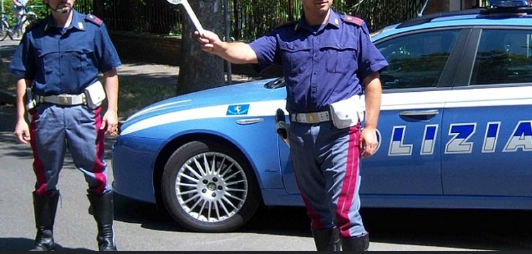
113
- POLIZIA DI STATO
( Police )
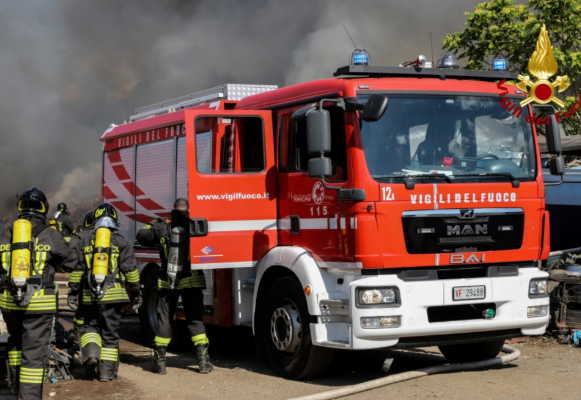
115
- VIGILI DEL FUOCO
( Fire Fighters )
112
- EMERGENZE
( Emergecies )